


The autumn is coming, and now, it’s time to say bye to hot summer days and prepare for the colder weather! Equipping your house with a good heater is such an intelligent way to get ready for the seasons’ transition, and to keep yourself and your family warm. The increase in fuel costs makes a lot of homeowners purchase for natural fuel heaters to cut the utility costs.
Nevertheless, the multitude of prices/features/models may be confusing and overwhelming. The type of fuel that you prefer is the first factor to consider. Therefore, in this article, we will help you differentiate two of your main options. In other words, this article will debate about pellet stove vs. wood stove, each of them has their own pros and cons. Now, let’s take a look!


Pellet Stove Vs Wood Stove: Which One You Should Choose?
Can I Save More Money with a Pellet Stove or a Wood Stove?
This is the first question that everyone always asks when considering these kinds of stoves. Before knowing how those heaters work – most people love to find out how much money they can save as well as how long they can see the output on their investment.
And the answer to these questions is – “It depends!” How is the insulated level of your house? Does its layout let the warm air flow easily from a certain room to another one? Are you near a wood distributor or a pellet, which can give you a reasonable fuel price? Are you intending to supplement your gas or oil heat, or even replacing it? So, that’s it.
There are too many questions on this issue that prevent you from answering the money question first. All you need to do is to find a reliable stove dealer in your surrounding and then, get them to come to your home for a proper appraisal.


In other words, those may help:
- Pellet and wood heat is considered to be six-time cheaper than gas or oil
- US Government is offering a green tax credit, which is up to thirty percent of your stove’s cost in case it owns more than 75% efficiency rating.
- Pellet or wood inserts and stoves seem to be more attractive to many homebuyers. Therefore, while your stove cannot increase your house’s official appraisal (however, in certain cases, it works), it will absolutely help heat up all bidding and tip the scales.
Comparing Wood Burning Stoves with Pellet Stove
#1: The Fuel’s Cost
Pellet stove:
The pellet stove is a little bit different from other kinds of stoves since it is mainly designed to burn only small pellets. The material of these pellets is the wood waste, and their size is similar to the size of food for the rabbit. A bag of pellets is 40 pounds in weight. They can be stacked neatly and stored well so long as you keep them away from the moisture.
Besides, wood pellets do not attract insects or rodents. Those who often heat with pellet stoves use between 2 to 3 tons of pellets in the winter. It is highly recommended that all of the pellets required for the cold winner should be purchased up front because the pellets’ supply in your local may run out in mid-winter.
Wood Stove:
Wood is the cheapest fuel to heat with, even if you consider the price of wood that is stacked, delivered and split for you. The idea of cutting down the trees for fuel is common among those who are owning wooded property.
There’re also many opportunities for you to get free wood because nowadays, the tree-trimming businesses let people freely haul off their cut wood.
Related: A Complete Guide to Pellet Stove Inserts Installation
#2: Powering The Stove
Power is another aspect, which distinguishes pellet stoves and wood stoves.
Wood stove power:
DON’T REQUIRE POWER. These wood stoves work as fireplaces – all you need to do is to add some wood, then light it and stoke as needed. They can completely operate without requiring any power like electricity. Because of this reason, they are always usable so long as the timber is available.
Pellet stove power:
REQUIRE POWER. No matter what, pellet stove always needs the power to operate. And electricity is the keystone in its operation. Therefore, if its power goes out, you have to say goodbye to your fire. Electricity gives power to a motorized hopper, which feeds pellets into your stove. It’s also possible to run pellet stove on a generator or a UPS (Uninterruptible Power Supply) backup battery during power outages.

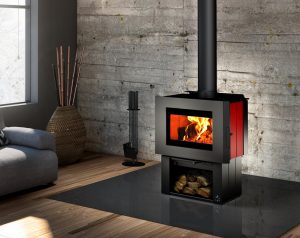
#3: Rating of Eco-friendly
Pellet stove:
When coming to eco-friendly, pellet stoves will be the winners. They are so friendly to the environment that the EPA does not even monitor their usage. The greatest feature of a pellet stove is that the material of pellets comes from wood waste.
Therefore, when using the pellet stove, you can recycle and help to keep your food waste out of the landfills. About carbon emissions, when being burned, pellets stoves can emit 0.035 pounds of carbon dioxide per kWh.
Wood Stove:
On the contrary, wood stove releases 0.00612 pounds of carbon dioxide per kWh. This means that between these two stoves, the wood one seems to be less green than the other one. Nevertheless, both options are all considered as carbon neutral. Thus, you need not feel guilty when using either of these two.
#4: Convenience
Wood-burning stoves:
This kind of stoves is very convenient in case the electricity goes out, and it does not require other heat sources as well.
Pellet stoves:
Pellet stove may be a very convenient appliance as you can use a remote control or a thermostat to control them. If the hopper holding pellets is larger, you will have more time to enjoy the warmth of your stove without doing anything.
A slow-burning fire and a large hopper is a perfect combination because, with them, your pellet stove is able to burn up to 65 hours and totally hands-free. All you should do is to pour the pellets into the stove, then get it started and now, nothing can disturb you except for the running out of pellets.
And finally, in case of blackouts, you just need to keep a battery-powered energy supply to solve the requirement for extra power.
#5: Maintenance
Pellet stove:
Just as a wood heat stove, pellet stove requires removal of ash and regular cleaning. With this stove, emissions and ash volume is less than other heaters. Because pellets are the only fuel used in your pellet stoves, thus, there isn’t any wood chip or bark mess to clean. Besides, the stove’s operation is almost smokeless and clean.
Wood Stove:
On the other hand, maintaining a wood stove may need lots of work. You need to maintain the chimney, flue as well as other components. The fact is that besides soot and residue clearance, an annually certified chimney sweep is needed and this task may be quite expensive.
Another essential concern in maintenance for your wood stove is that its catalytic combustor must be examined at least 3 times a year.


#6: Stove Safety
Wood Stove:
Wood stove gives off flame sparks that may lead to burns. Moreover, those units may accumulate creosote deposits and cause dangerous house fires. Make sure that you buy insurance for your house just in case burning occurs. In addition, firewood may attract pests and mold into your house.
Pellet stove:
Pellet stove burns much safer and cleaner, without harming yourself or your house. The contained flames can protect your family from flying sparks and embers. Nevertheless, your pellet stove may become too hot to touch.
Therefore, all members of your family should be aware of this extremely hot stove. Moreover, you should keep your pets away from the stove as well.
Related: Best Pellet Stove Reviews & What You Need to Know Before Buying One
#7: About Aesthetics, There is Both Bad News and Good News.
Just as wood stoves, now pellet stoves come in many styles that complement contemporary and traditional décor. About the flame, you may sacrifice style for the efficiency.
Wood Stove
On looking into a wood stove, you can observe orange flames licking at aged, dried logs. Moreover, you can enjoy the smoky aroma when burning timber.
Pellet stove
Pellet stove has the similar bright flames. Nevertheless, the “wow” factor can be diminished a little since the logs that you would like to see are replaced by the minuscule fragments.
What are the Cons of Pellet Stove vs. Wood Stove
-
Pellet Stoves
Electricity required: Since its operating system consists of an auto-feed, a thermostat, and several fans, a pellet stove requires electricity to function well. That doesn’t mean a wood stove is not electrical-based (although some models are indeed not), but here a pellet stove is not an optimal option if you’re going for a heating device for you to live “off the grid-lines.”
Highly prone to breaking: To bring a pellet stove into a function, many working parts are involved. Thus, each part adds up to the malfunction probability. Even though what you are having is a premium and reputable brand, the chances are that you will have more replacement parts for a pellet stove than for a wood stove.
Pellet availability: Pellets are difficult to find, which seems to be quite a hassle. You’re likely to have wood materials around your area – either from chopping and drying wood on your own or from a vendor. Yet, you have to purchase pellets which have to meet the certain quality requirement. Otherwise, those pellets will envelop every breakable working part with creosote. Remember to check whether you can buy pellets or have them shipped to your locality before you decide to purchase a pellet stove.
-
Wood Stoves
Chimney required: While you can inexpensively vent your pellet stove to the outside wall, a wood stove requires you to have a chimney installed.
Location: For most wood-burning stoves, their acceptable location must be at least one foot distanced from flammable walls. In contrast, you can install your pellet stove anywhere from 3 to 6 inches away from combustible materials.
Wood stoves have lower efficiency than pellet stoves do. The efficiency of the most efficient wood stoves is only equal to that of low-end pellet stoves. Moreover, dried (or well-seasoned) cord wood contains approximately 2-3 times more moisture than pellets. Also, a wood-burning stove provides around 75-80% fewer BTUs for every cubic foot of fuel. It even consumes a great amount of wood. For a cord, it requires nearly fifteen trees of 10 DBHs ( inches of diameter at breast height – an often used method to measure tree size). For people who consistently use their wood stoves throughout chilly months, their consumption can reach up to 3 cords of wood every year.
