


It is truly enjoyable to have your own an RV which is equipped conveniently inside, but how to test a deep cycle battery to make sure it is working properly.
One thing you should know is that a travel trailer largely depends on the system function which has to work on twelve volts. To be honest, I rarely test out these 12 – volt batteries of the RV house or known as deep cycle ones, so they often stopped working properly. You may imagine how amazing the experiences were, and then your RV suddenly stopped functioning. I sometimes felt angry a bit and actually lost at such moment.
For this reason, I made a decision to check the deep cycle batteries regularly. Because in fact, even the best deep cycle battery for RV is able to capacity while it sits for a longer time. In particular, before you plan an adventure, it is critical to do the test of the deep cycle batteries to see whether they can operate well or should be replaced.
And in this post, I hope that some information I would like to share with you on how to test a deep cycle battery would help you a lot. In my opinion, it is necessary for you to look after your batteries, and in return, they also will help you in the long run.
How to Test a Deep Cycle Battery Step by Step


Gather the Necessary Supplies
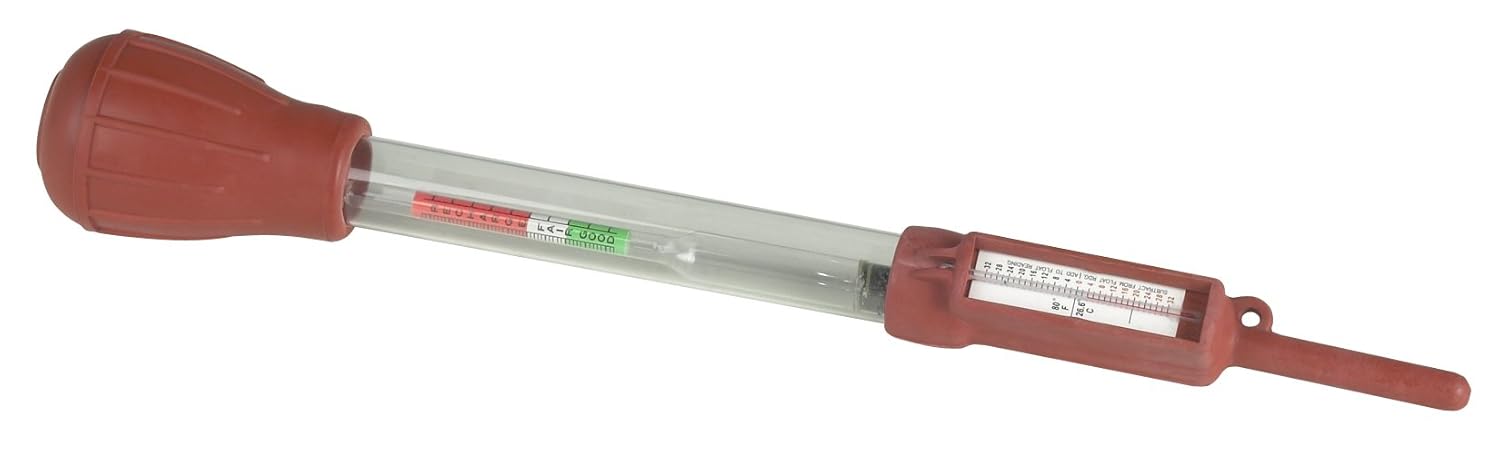
You may wonder where to start to be able to know how to test a deep cycle battery. In my opinion, first of all, you need to prepare all the necessary supplies. In case your battery is non – sealed, I strongly suggest that you make use of a compensated hydrometer with high quality. As usual, these supplies can be bought at an auto parts store with the price ranging from $5 to $20.
You may know that to determine the state of charge, a hydrometer which is a kind of float type device will be used to measure the electrolyte’s specific gravity in each cell. This is considered an extremely accurate method of determining the state of charge of the battery as well as its dead or weak cells.

In order to adjust the electrical or charging systems or in case you are using a sealed battery, my advice is that you need to prepare a digital voltmeter with the least accuracy level of 0.5 percent. You can purchase this device at any electronics store such as Radio Shack with the price ranging from $20 to $50.
Although you can use analog voltmeters, their accuracy is not highly appreciated for the measurement of millivolt differences of the charging system’s output or in the state of charge of battery. It’s up to you to decide whether to buy a battery load test that you can buy at the auto parts stores with $ 70.
If you need to use the electric trolling motor regularly like me, then it is better to buy one. Besides, another method with higher accuracy to check the lead-acid battery’s capacity is the use of a conductance tester.
In addition, some other necessary supplies consist of battery terminal cleaner, a screwdriver, safety glasses, and gloves.
Inspect your battery
Only by observing the surface of deep cycle batteries, you can discover some signs of failure. Thus, you can repair some battery problems through a simple check. For example, you can discover a few obvious problems by checking with your eyes such as damaged or leaking battery, loose cable terminals, loose hold-down clamps, corroded terminal clamps, swollen or corroded cables, electrolyte levels lower than the top of the plates, or loose or broken alternator belt.
You should make sure that your battery top is dry and clean all the time because the battery may discharge through the grime if there are dirt and dust on the battery. In addition, it is essential to check loose or broken terminals of the battery because they also may cause danger as a result of short circuits.
Besides, you need to check flooded deep cycle batteries for damaged and leaking battery cases which may occur because of its overheating or overcharging. However, if you use AGM deep cycle batteries, you do not have to worry about this because such battery is equipped with glass mat technology that helps prevent leakage, even in the case of being damaged.
In general, deep cycle batteries can still operate normally even with holes and cracks but they are not supposedly safe. Therefore, it is better to get rid of any battery which is damaged.
When you see the electrolyte levels in non – sealed batteries at a low level, you need to cool the battery and provide distilled water to one – fourths of an inch below the bottom of plastic filler tube (or vent wells) or to the level suggested by the battery manufacturer.
Remember that the plates have to be covered all the time and it is essential to prevent overfilling especially under the hot weather because the high temperature can make the electrolyte expand and then, overflow.
Clean the Battery Posts by removing surface charge
Surface charge is an uneven combination of water, and sulfuric acid below the plates’ surface resulted from discharging or charging. This feature may make a good battery look bad, and a weak battery looks good. To make the battery posts clean, you should use a manual battery post cleaner and make sure that spray terminal cleaner is not recommended. To know whether the posts are clean or not, keep scrubbing them till they are shiny.
- Allow using the battery from 4 to 12 hours to support for the dissipation of the surface charge.
- Make use of a load which is 33 percent of the ampere-hour battery capacity in 5 minutes. Then, wait for about 5 to 10 minutes.
- Make use of a battery load tester to apply a load at 1/2 the CCA rating of the battery during 15 seconds. Then, wait for about 5 to 10 minutes.
Conduct the Test
To check the charge level of your deep cycle battery, you can apply some different ways. The most precise method is load testing and measurement of battery voltage and specific gravity.
Specific gravity measurement
To make sure that your deep cycle battery is charged fully, you need to use a battery hydrometer to determine the specific gravity. After removing the port caps of your battery, you put the tube of the hydrometer into the electrolyte, then squeeze the black ball. After that, gradually release and liquid will flood the window.
You can see your reading after the window is full completely. In other words, what you can see is the specific gravity that is the density of electrolyte in comparison with the density of water. Then compare your result with our chart. If your reading is low, it means that you should charge your battery.
|
% Charge |
Specific Gravity* (SG) |
|
100 |
1.255 – 1.275 |
|
75 |
1.215 – 1.235 |
|
50 |
1.180 – 1.200 |
| 25 |
1.155 – 1.165 |
| 0 |
1.110 – 1.130 |
Voltage measurement
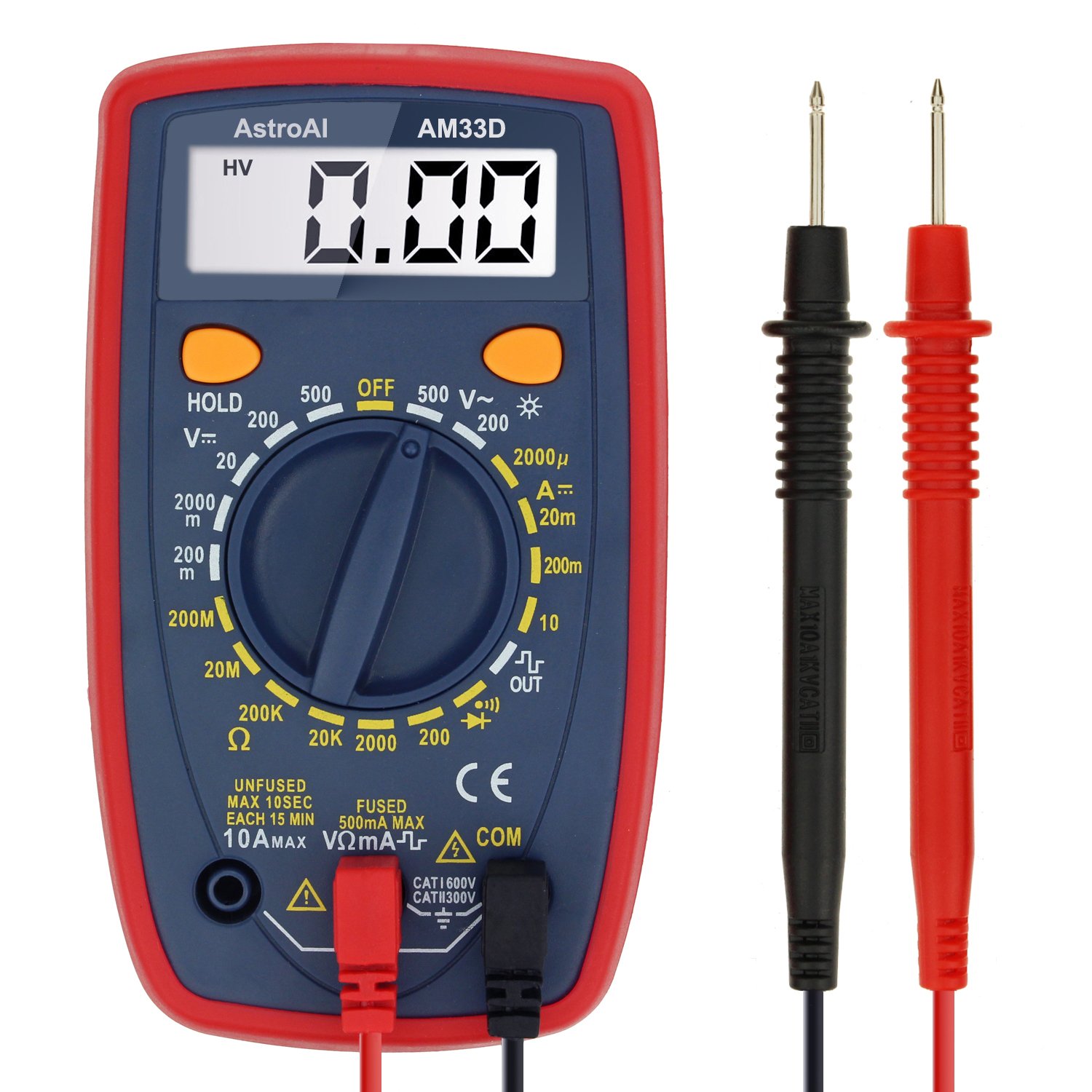

To measure the voltage, you can check with a multimeter or a digital D.C. voltmeter. If you want to use a voltmeter to test, I suggest a digital meter instead of an analog meter because it can provide you with millivolt differences with higher accuracy.
Before testing the voltage, make sure that you disconnect your battery for at least 24 hours. In addition, gravity and temperature also bring into play during the process of determining the voltage.
Besides, measuring the voltage is also a good method to know about the state of charge. In case you own a monitor and know how to read the voltage, you should remember one thing that the low voltage means the less charge in the battery.
After determining the voltage of your deep cycle battery, then what you will do next is analyze the state of charge. You just need to make a comparison between the state of charge table with the measured voltage to know the estimated charge level of your battery.
For instance, your measured AGM deep cycle battery is 12.30 V, so the state of charge will be 70% as presented in the State of Charge table. Although this table is used for 12V AGM deep cycle batteries, it can be seen as a reference source for other types of battery. So bear in mind that slight differences in determining the voltage are possible. Typically, the voltage of a deep cycle battery with full charge lies between over 12.8V and 13V.
If your battery:
- Shows 0 volts, it is highly possible that your battery suffered from a short circuit.
- Cannot reach more than 10.5 volts despite being charged, it may have a dead cell.
- Is charged fully according to the State of Charge table but the voltage reading is under 12.4V, your battery may be sulfated.
As a natural byproduct during the battery discharge process, sulfation covers the surface of plates and eliminates the needed chemicals for producing power. Sulfation is also a contributing factor to reducing the capacity to charge fully and making the self-discharge of your battery more rapid than normal.
Once your battery is sulfated, then charging means nothing because your battery at that time is never fully charged. At this point, restoring your battery to a good state by changing alone is impossible. If the original battery has this sign, then it’s time to purchase a new battery.
Load testing
Another way to test your battery is load testing. By this way, the amps will be removed from a battery. You can buy a load tester at any auto parts store.
In addition, a few battery companies even label the amp load for testing on their battery. You should know compared to the CCA rating; this number usually values a half. For example, the load test will be at 250 amps on a 500 CCA battery for 15 seconds. Only if your battery is at nearly or full charge can you use a load test?
To perform a load test, the first thing you need to do is connect the positive cable of a load tester to the positive post of your deep cycle battery. Then, do the same with the negative cable and the negative post. Remember not to connect the negative cables first because sparking may occur as a result.
Next, press the switch or test button on a load tester and wait for the result. If it lies between 6 and 12 volts which are under the rating of voltage for the battery, it means that you should replace the battery. Except for voltage readings, the time for battery replacement is sometimes shown on many testers.
After the test finishes, the cables should be disconnected in the opposite manner. Sometimes, a few batteries that cannot complete the test should be retested or refurbished to pass.
Analyse the test data
In terms of how to test a deep cycle battery, it is important to read your testing’s results. Below is my summary you can consult with:
- The differences between cells for hydrometer readings should be under 0.05.
- Digital voltmeters are read the same as the voltage in this document. Meanwhile, the gel cell battery voltage (when fully charged) and the sealed AGM are slightly higher lying between 12.8 and 12.9. In case your voltage readings are in the range of 10.5 volts on a charged battery, it means that your battery has a shorted cell.
- If maintenance – free wet cell appears in your battery, there are only two ways to test including load test and voltmeter. Every maintenance-free battery with a built-in hydrometer (green or black window) can inform you of the condition of one cell of six. However, good readings from one cell are easier while readings with other cells may get into trouble.
- If you are unsure about the result of the battery test, then you can contact the battery manufacturer. As usual, a toll – the free number will be attached to the battery to call in need.
- Using a hydrometer tester or digital voltmeter is so important that you can see the differences in cells as well your battery’s condition.
